
Serving St. Louis, St. Charles & Nearby Communities
CGR Legacy Construction helps St. Louis-area commercial property owners and managers evaluate, repair, restore, re-cover, and replace flat / low-slope roof systems. We focus on the conditions that matter most on these roofs—drainage, membrane condition, seams, flashings, penetrations, rooftop details, and the underlying roof assembly—so you can choose the right next step instead of guessing.
Most “flat” commercial roofs are actually low-slope systems designed to move water toward roof drains, scuppers, gutters, or other drainage points. However, the right repair or replacement path depends on the existing roof system, drainage, moisture / substrate condition, details, building use, and long-term goals.

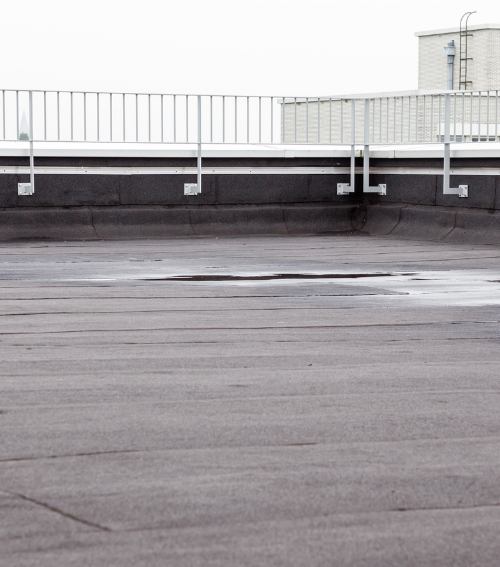
Commercial roofs often look flat from the ground, but most are built with a slight slope so water can move toward drains, scuppers, gutters, or other discharge points. Because water moves more slowly across a low-slope surface, the roof depends heavily on membrane continuity, sealed seams and transitions, properly detailed penetrations, and a drainage plan that keeps water moving.
Drainage matters on every low-slope roof. A well-designed roof plane guides water toward drains / scuppers, and tapered insulation or crickets can help direct flow where needed.
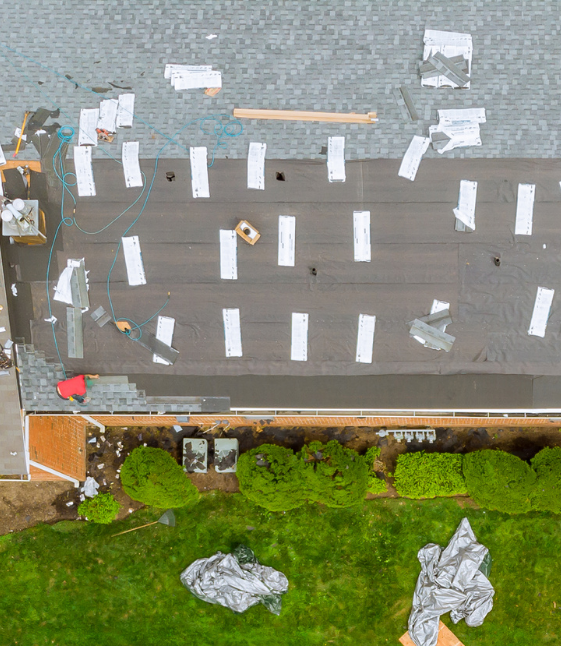
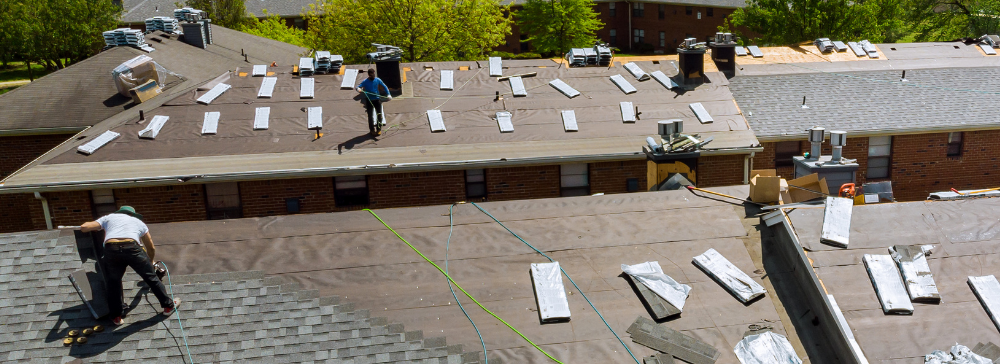
However, the water showing up inside a building does not always sit directly below the roof entry point. On a low-slope roof, water can travel along insulation, deck lines, fasteners, seams, or interior construction before it becomes visible. That is why the first job is to identify the actual source and understand whether the problem is localized or part of a broader roof-system condition.
Thermoplastic single-ply membrane with heat-welded seams. Featured membrane option for replacement / reroof / some recover assemblies.
Fluid-applied elastomeric polyurethane system used for restoration / waterproofing on compatible, properly prepared roofs. Budget-conscious restoration / life-extension pathway when the existing roof qualifies.
Synthetic rubber single-ply membrane typically detailed with seam tape / accessories. A common existing system that owners may encounter.
Thermoplastic single-ply membrane with heat-welded seams. Explain as another common thermoplastic low-slope system.
Polymer-modified asphalt membrane system available in multiple installation methods. Common on existing buildings and as an industry alternative.
Multi-ply asphalt / reinforcement roof system. Common on older existing roofs.
Structural or retrofit metal roof application. Keep mostly on Commercial Roofing / replacement pages; not the core “flat roof” focus.
Overall, TPO is a thermoplastic single-ply membrane commonly used on low-slope commercial roofs. Its seams are heat-welded, and reflective membrane options are widely used on commercial buildings. TPO is a major system to compare when a roof needs replacement or a qualified re-cover—but not as an automatic answer for every building.
Sometimes. If the existing low-slope roof is still a suitable candidate, a liquid-applied elastomeric coating can be a lower-upfront-cost restoration path that protects the existing roof and extends useful service life without immediately tearing off the full system. In addition, CGR currently offers a polyurethane / elastomeric coating pathway on qualifying roofs. The roof still needs to be evaluated first, known leaks and defects need to be addressed, and compatibility / preparation requirements depend on the coating system and existing substrate.
For example, some commercial flat roofs need a focused repair. Others, however, can be restored with a compatible coating. Some may qualify for a re-cover, while others are better candidates for full tear-off and replacement. That is why CGR inspects the roof, reviews the existing system and drainage, documents visible conditions, and builds the recommendation around the actual building instead of forcing every roof into the same solution.

Drainage matters on every low-slope roof. A well-designed roof plane guides water toward drains / scuppers, and tapered insulation or crickets can help direct flow where needed.
Building use, active leaks, roof history, system if known, urgency, access, occupants / tenants, project timeline.
Walk and document the membrane, drainage, seams, flashings, curbs, penetrations, parapets / edges, prior repairs, and visible problem areas.
Explain whether the roof appears best suited for repair, restoration / coating, re-cover, replacement, or further investigation.
Define the proposed work, assumptions, materials / system, exclusions, access / staging, schedule, and any concealed-condition contingencies.
Coordinate the repair, restoration, re-cover, or replacement around weather, access, safety, rooftop equipment, and building operations.
Review completed work, punch items, photos, warranty / maintenance information when applicable, and future inspection recommendations.
Review documented residential roofing work and real feedback about communication, recommendations, workmanship, cleanup, and the overall experience.
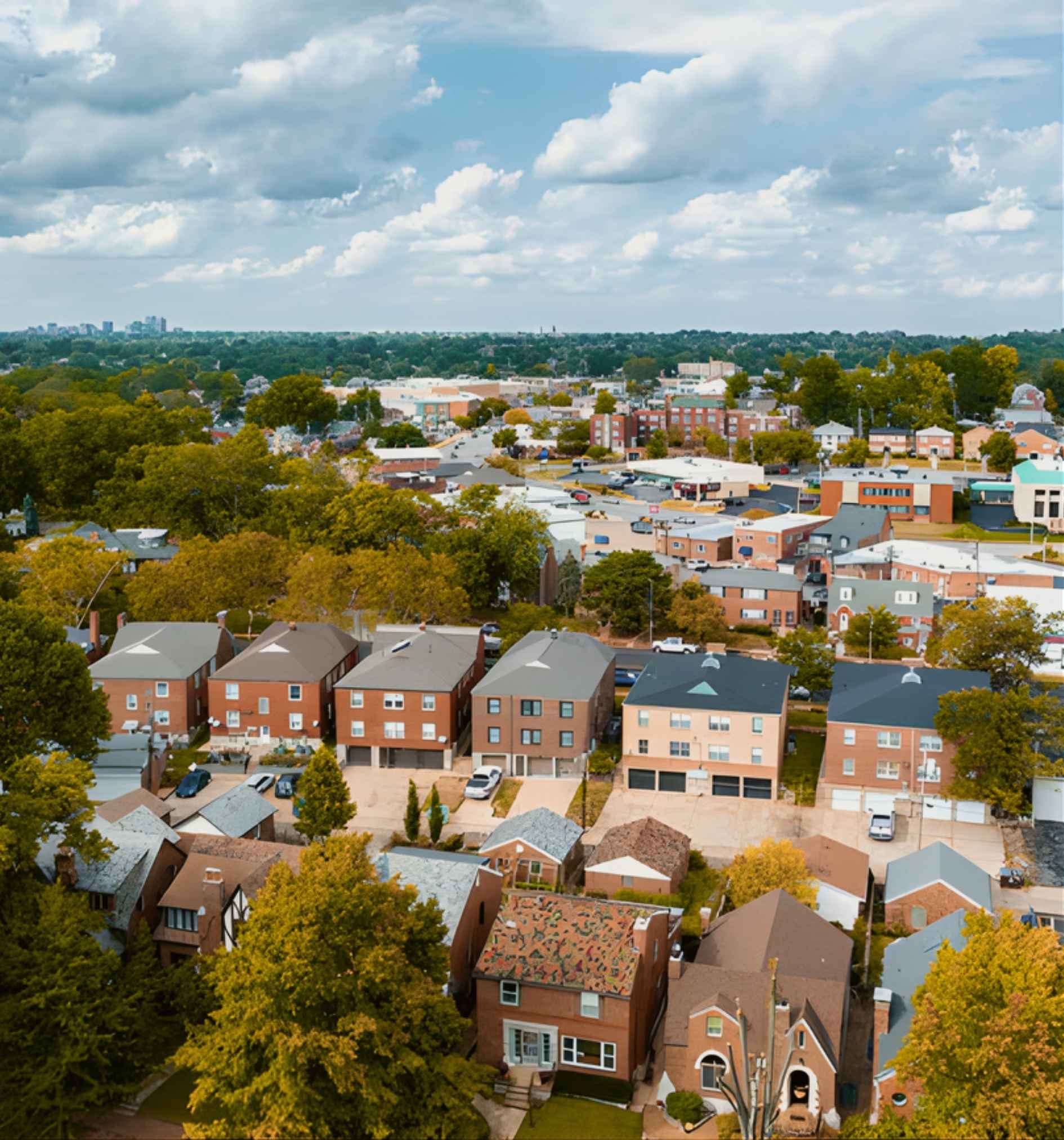
CGR Legacy Construction also provides commercial flat and low-slope roofing services across St. Louis, St. Charles, and surrounding Missouri communities. However, service availability can depend on property type, roof system, scope, access, project size, scheduling, and current production capacity. So contact CGR to confirm the building and project.
“Flat roof” is the common search term, but most commercial roofs that look flat have some slope built into the roof or roof assembly to move water toward drains, scuppers, gutters, or other drainage points. In fact, roofing professionals typically refer to these as low-slope roof systems.
For example, common low-slope systems include TPO, PVC, EPDM, modified bitumen, built-up roofing, liquid-applied systems, and certain metal / retrofit assemblies. Ask CGR which of these systems it currently installs.
Generally, standing water can be related to blocked drains or scuppers, low areas, inadequate slope, structural deflection, surface irregularities, or drainage design / maintenance issues. The cause should be evaluated rather than assumed from the water alone.
Yes. Localized leaks, punctures, seams, flashings, or other defects may be repairable when the surrounding roof remains serviceable. The assessment should determine whether repair, restoration, re-cover, or replacement is the better path.
Generally, TPO is a thermoplastic single-ply membrane widely used on low-slope commercial roofs. In addition, its seams are heat-welded, and it is available in reflective membrane options and multiple approved installation configurations.
Sometimes. Generally, a compatible, serviceable roof may be a candidate for a liquid-applied elastomeric coating after defects are repaired and the surface is properly prepared. CGR also offers a polyurethane / elastomeric coating pathway on qualifying roofs; the exact product and preparation requirements are project-specific.
No. In fact, polyurethane / elastomeric liquid-applied roof coatings and spray polyurethane foam roofing are different systems. CGR uses the exact product and system name for the coating it proposes.
For example, potential leak locations can include seams, penetrations, HVAC curbs, base flashings, parapets, coping / edge details, drains, scuppers, punctures, and damaged membrane areas. However, the visible interior drip may not be directly below the roof entry point.
A reroof can create an opportunity to address drainage using strategies such as tapered insulation, crickets, drain / scupper work, or other assembly changes when the roof design, structure, code, and project scope support them.
CGR also serves commercial properties in St. Louis, St. Charles, and nearby Missouri communities. However, contact the team to confirm the property location, roof type, and project scope.
If you are seeing a ceiling stain, active water, a recurring leak, missing shingles, or moisture after a storm, start by finding the roofing source. CGR will inspect the roof, explain what we find, and help you understand whether the next step is a targeted repair or broader roofing work.