
COMMERCIAL ROOF RESTORATION | ST. LOUIS & ST. CHARLES
Commercial Roof Coatings in St. Louis, MO
CGR Legacy Construction evaluates and restores eligible commercial and low-slope roofs with liquid-applied coating systems designed to renew surface protection, reduce tear-off when restoration makes sense, and extend the useful life of an existing roof. Our current coating capability includes polyurethane / urethane elastomeric restoration, with the recommendation based on the roof’s actual condition—not a one-size-fits-all product pitch.
- Roof Condition Evaluation
- Polyurethane / Elastomeric Restoration
- Repair Before Coating
- Restore vs. Replace Guidance

What Is a Commercial Roof Coating?
A commercial roof coating is a liquid-applied restoration layer installed over an eligible existing roof after the roof has been inspected, repaired, cleaned, and prepared. Depending on the system, the coating cures into a continuous elastomeric surface that helps protect the existing roof from weather and UV exposure and can postpone a full tear-off when the underlying roof is still a good restoration candidate.
However, the coating is only one part of the restoration. A legitimate coating project also includes qualification of the existing roof, repair of defects, detailing at seams and penetrations, surface preparation, adhesion / compatibility checks where required, controlled application, and final review.
When a Commercial Roof May Be a Good Candidate for Coating
A roof coating can make sense when the existing roof still has enough serviceable structure and substrate to restore rather than replace. The exact qualification process depends on the roof system and coating manufacturer, but common considerations include:
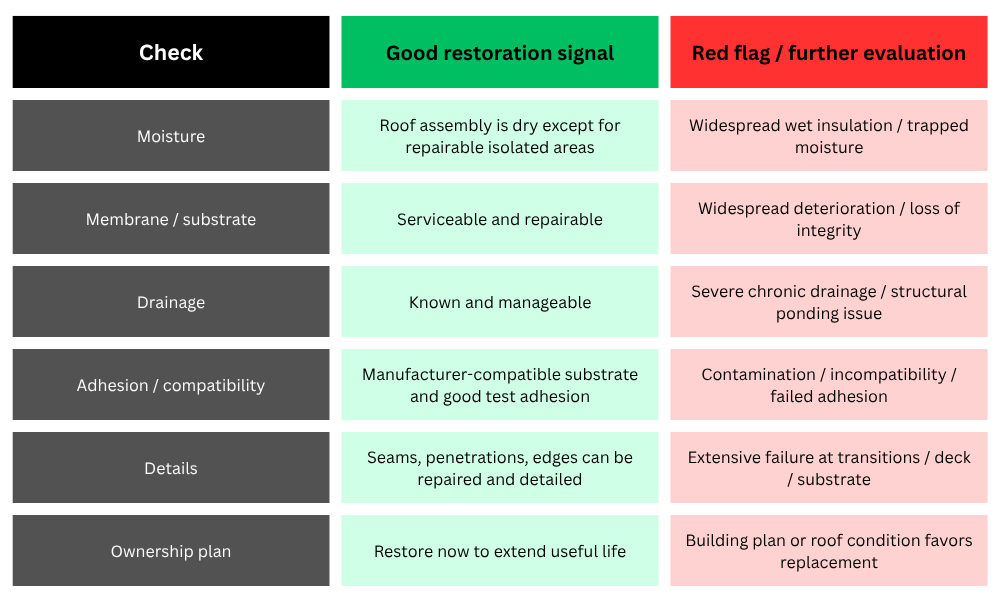
- The existing roof is generally stable and serviceable rather than broadly failed.
- Leaks and localized defects can be identified and repaired before coating.
- Wet insulation or trapped moisture can be identified and removed / addressed rather than encapsulated.
- The substrate is compatible with the selected coating system.
- The roof can be cleaned and prepared well enough to achieve required adhesion.
- Drainage conditions are understood and do not make the proposed coating system inappropriate.
- Seams, flashings, curbs, penetrations, fasteners, drains, scuppers, and perimeter details can be repaired and detailed as required.
- The owner’s budget horizon and building plan make restoration more sensible than immediate replacement.
When a Roof Coating May Not Be the Right Answer
- Widespread wet insulation, saturated roof assembly, or trapped moisture that cannot be economically isolated and replaced.
- Extensive membrane or substrate deterioration that no longer provides a dependable base for restoration.
- Structural or deck concerns that require deeper corrective work.
- Drainage / ponding problems that should be corrected with tapered insulation, drains, scuppers, or more substantial reroof work.
- A substrate or prior coating that is incompatible with the proposed system or fails adhesion testing.
- Repeated patching / repairs that indicate the roof has moved beyond a practical restoration window.
- Owner needs a new assembly, insulation strategy, code upgrade, warranty path, or long-term capital plan that a coating cannot reasonably provide.
Common Commercial Roof Coating Types
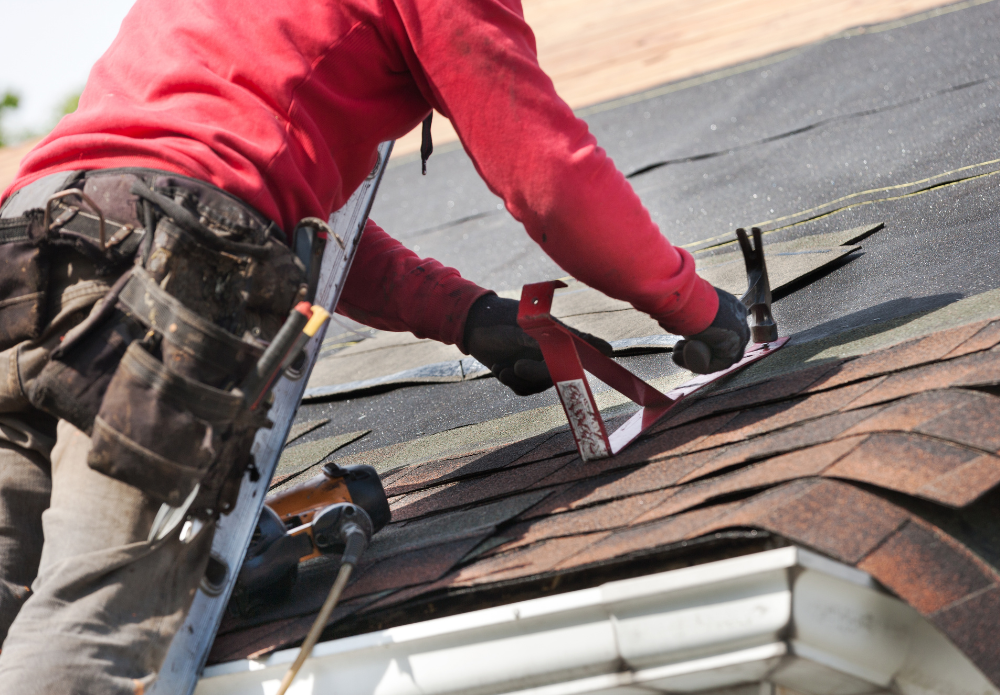
Polyurethane / Urethane
Tough, flexible coating systems; strong balance of tensile strength, elongation, hardness; certain systems offer strong abrasion, impact and chemical resistance. However, the exact substrate, base/top coat, preparation, thickness, and cure are confirmed for each project.
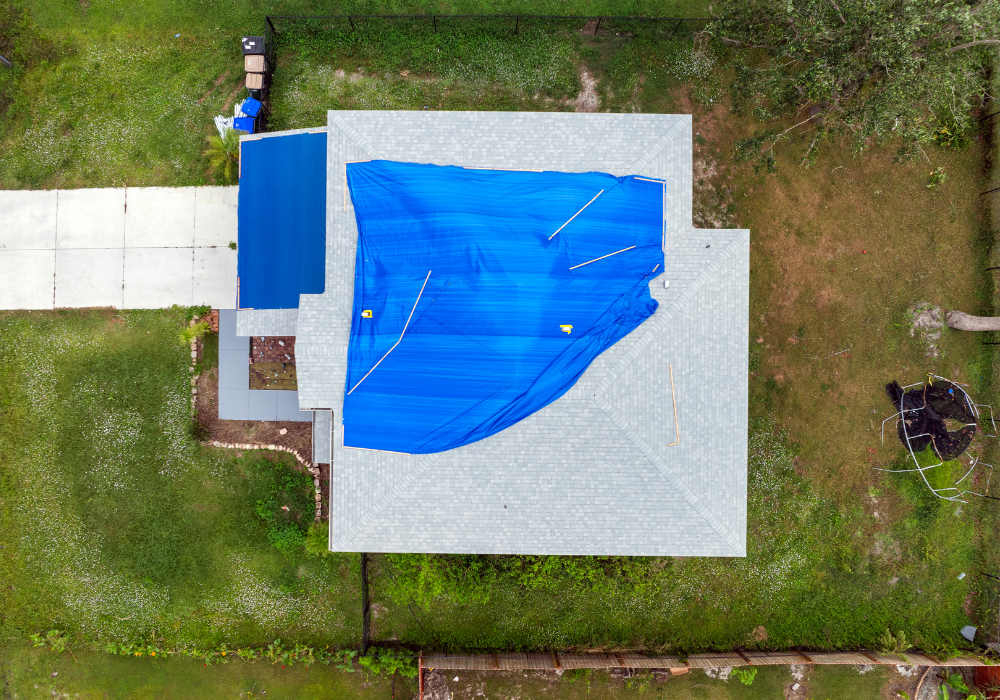
Silicone
Strong UV / weather resistance; many silicone systems are designed to tolerate ponding water; can form a monolithic liquid-applied surface. Surface prep and adhesion still matter; dirt pickup, recoating compatibility, slip / walkability and product-specific details must be evaluated.
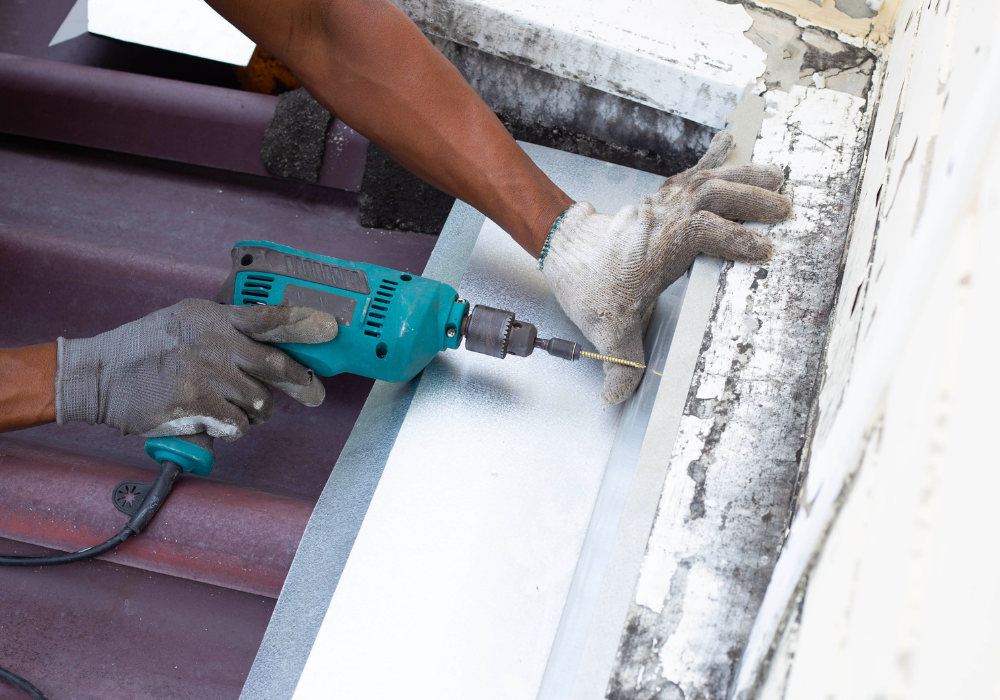
Acrylic
Water-based options; reflective white surfaces; commonly used for weathering / UV protection on qualifying roofs; economical in many restoration applications. Generally requires clean, dry substrate and appropriate drainage; cure/weather window and ponding-water limitations depend on product.
Still, no single coating chemistry is automatically “best.” Instead, the right choice depends on the existing roof, moisture condition, drainage, substrate, rooftop exposure, performance goals, maintenance plan, and the manufacturer specification for the project.
GAF research
GAF’s current commercial coatings family includes silicone, acrylic, and urethane products. GAF also publishes specific restoration assemblies for silicone over asphaltic and metal roofs, acrylic restoration systems, and urethane products such as the Elastuff® family. However, the exact coating product CGR uses is confirmed for each roof.
Polyurethane Roof Coating for Commercial Roof Restoration
CGR currently offers a polyurethane / urethane elastomeric roof coating option for eligible commercial roofs. It is a restoration path for owners who want to preserve a serviceable roof and manage capital cost without immediately moving to full replacement.
Specifically, polyurethane coating systems are valued for toughness and flexibility. Depending on the exact product, manufacturer documentation may emphasize tensile strength, elongation, hardness, abrasion resistance, impact resistance, chemical resistance, weather protection, or related performance characteristics. Therefore, these benefits depend on the exact product used on your roof.
What CGR can safely say now:
- Review what happened and what the owner is seeing
- Assess accessible roof/exterior conditions when weather and safety allow
- Identify active leak points, openings, displaced materials, or other visible damage
- Determine whether temporary protection, direct repair, or follow-up work is the practical next step
- Explain the construction recommendation and what should happen next
What Roof Systems May Be Candidates for Coating?
Commercial metal
Aged single-ply membrane
Asphaltic / BUR / modified bitumen
Structural concrete
SPF / previously coated roof
What Happens After You Call
#1 Inspect and qualify the existing roof
Identify active leaks, prior repairs, drainage conditions, substrate type, wet areas, damaged membrane, open seams, flashings, penetrations, edges and other defects.
#2 Address wet or failed materials
Remove / repair isolated wet membrane or insulation and correct other conditions that should not be encapsulated.
#3 Clean and prepare the roof
Dirt, oils, biological growth, loose coatings and other contaminants can otherwise prevent adhesion. Therefore, the preparation method depends on the substrate and coating system.
#4 Verify compatibility and adhesion where required
Manufacturer systems may call for test patches, primers, bleed-blocking primers, rust treatment, or other substrate-specific preparation.
#5 Repair and detail the roof
Treat seams, fasteners, flashings, curbs, penetrations, drains, scuppers, edges, cracks, splits and other vulnerable details before field coating.
#6 Apply the base coat / top coat or specified coating assembly
Use the manufacturer’s required application method and coverage rate. For example, spray, roller, brush, squeegee or other methods may be used depending on product.
#7 Check coating thickness and coverage during application
Wet-film thickness checks help confirm uniform material coverage when required by the specification.
#8 Allow proper cure and protect the work
Also, weather, temperature, humidity and moisture affect coating cure and application windows.
#9 Final review and closeout
Verify finished details, document the project, provide maintenance / inspection guidance and preserve manufacturer documentation when applicable.
Should You Coat, Repair, Recover, or Replace the Roof?
Targeted Repair
Defects are localized and the overall roof remains serviceable. Fix the specific problem, because coating may be unnecessary.
Roof Restoration / Coating
Existing roof is a legitimate candidate, defects can be repaired, moisture is controlled, and the owner wants to extend useful life. Preserve the existing roof with a liquid-applied restoration system when appropriate.
Recover / Overlay
Existing assembly may remain in place but a new membrane / roof layer is a better long-term path than coating. A new roof layer may provide a different performance / warranty strategy without full tear-off when code and conditions allow.
Full Replacement
Widespread moisture, deterioration, failed substrate, drainage / insulation needs, repeated failures, or capital strategy favor a new assembly. Replace the failing system rather than spending money restoring a poor candidate.
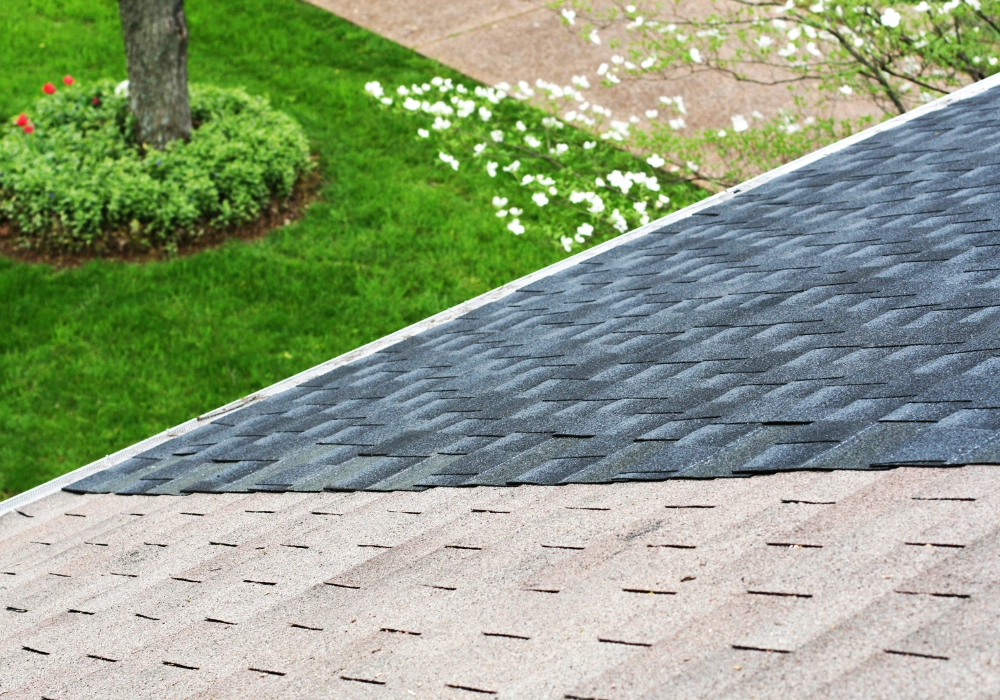
Overall, the right answer depends on the existing roof—not the product a contractor wants to sell. CGR should use the inspection to define the roof condition, moisture, drainage, repair history, substrate, remaining serviceability, and the owner’s budget horizon before recommending the next capital step.
Why Restore an Eligible Roof Instead of Replacing It Immediately?
- Lower tear-off exposure: A restoration project can reduce or avoid full tear-off when the existing roof is suitable, which may reduce debris, staging, and disruption.
- Capital timing: Coating can give an owner another roof-management option when the roof is still serviceable but needs renewed protection.
- Less operational disruption: Many coating projects can be completed with less tear-off and fewer invasive roof-removal activities than replacement, subject to the project scope.

- Continuous liquid-applied surface: Coating systems can create a monolithic protective surface over properly prepared roof fields and detailed transitions.
- Reflectivity: White or reflective coatings can reduce roof-surface heat. However, actual cooling / energy savings vary by building, climate, insulation, HVAC and coating performance.
- Renewable restoration potential: Some coating systems may be inspected, maintained and recoated in the future, depending on product, condition and manufacturer requirements.
See What a Clear Roof Inspection Looks Like
Review documented residential roofing work and real feedback about communication, recommendations, workmanship, cleanup, and the overall experience.
- City / market
- Service and homeowner problem
- What CGR found
- Work completed and result
- City / market
- Service and homeowner problem
- What CGR found
- Work completed and result
How Our Commercial Roof Coating Process Works
#1
Inspect the existing roof and identify active problems, moisture concerns, drainage issues, prior repairs and substrate type.
#2
Determine whether the roof is actually a coating candidate and whether repair, recover or replacement would make more sense.
#3
Define the repair and preparation scope, including wet-area removal, seams, penetrations, fasteners, flashings, cleaning and primer where required.
#4
Prepare and detail the roof before field coating.
#5
Apply the specified coating system using the approved method and coverage requirements.
#6
Complete final review, document the finished work and provide the owner with clear maintenance / next-step information.
Commercial Roof Coating FAQs
What is a commercial roof coating?
A commercial roof coating is a liquid-applied restoration system installed over an eligible existing roof after the roof is inspected, repaired and prepared. The coating cures into a protective elastomeric surface that can extend the useful life of a roof that is still a good restoration candidate.
Is an elastomeric roof coating the same as polyurethane?
Not exactly. “Elastomeric” describes flexible coating behavior. For example, acrylic, silicone and polyurethane / urethane products can all be elastomeric. CGR’s coating service uses polyurethane / urethane systems, and the exact product is confirmed for each roof.
Can a roof coating stop leaks?
A coating project can be part of restoring a leaking roof, but leaks and failed roof details should be located and repaired before coating. Coating over wet insulation or unresolved defects can hide rather than solve the underlying problem.
What commercial roofs can be coated?
Depending on the manufacturer system and roof condition, coatings may be used over certain metal, aged single-ply, asphaltic, concrete, SPF and previously coated roofs. Therefore, compatibility, moisture, adhesion, drainage and preparation are verified for the actual building.
What is the difference between polyurethane, silicone and acrylic roof coatings?
Polyurethane / urethane systems are often selected for toughness, flexibility and abrasion / impact performance; silicone systems are widely used where UV and ponding-water resistance are priorities; acrylic systems are often reflective, water-based and economical for appropriate roofs. Overall, the existing roof determines which chemistry is appropriate.
Is roof coating cheaper than commercial roof replacement?
It can have a lower upfront project cost when the existing roof is a legitimate restoration candidate because full tear-off may be reduced or avoided. The right comparison should also include the existing roof condition, repair scope, ownership horizon, warranty / maintenance plan and long-term capital strategy.
Does a reflective roof coating lower energy costs?
Reflective coatings can lower roof-surface temperature, so they may reduce cooling demand. However, actual energy savings depend on climate, insulation, building use, HVAC performance, coating color and reflectivity, and other building factors.
How do I know if my commercial roof is a good coating candidate?
Start with a commercial roof inspection. The roof should be evaluated for moisture, substrate condition, drainage, existing repairs, compatibility, adhesion, seams, flashings, penetrations and other conditions before a coating is recommended.
Do you offer polyurethane roof coating in St. Louis?
Yes. CGR currently offers polyurethane / urethane elastomeric roof coating for eligible commercial roofs in the St. Louis area. However, the exact system recommendation depends on the existing roof and the project requirements.
Need Commercial Roof Coating? Call CGR.
If water is entering the home, storm damage has exposed part of the roof, or sudden roofing damage needs attention, call CGR Legacy Construction and tell us what is happening. We will help you understand the safest practical roofing next step based on the condition and current availability.