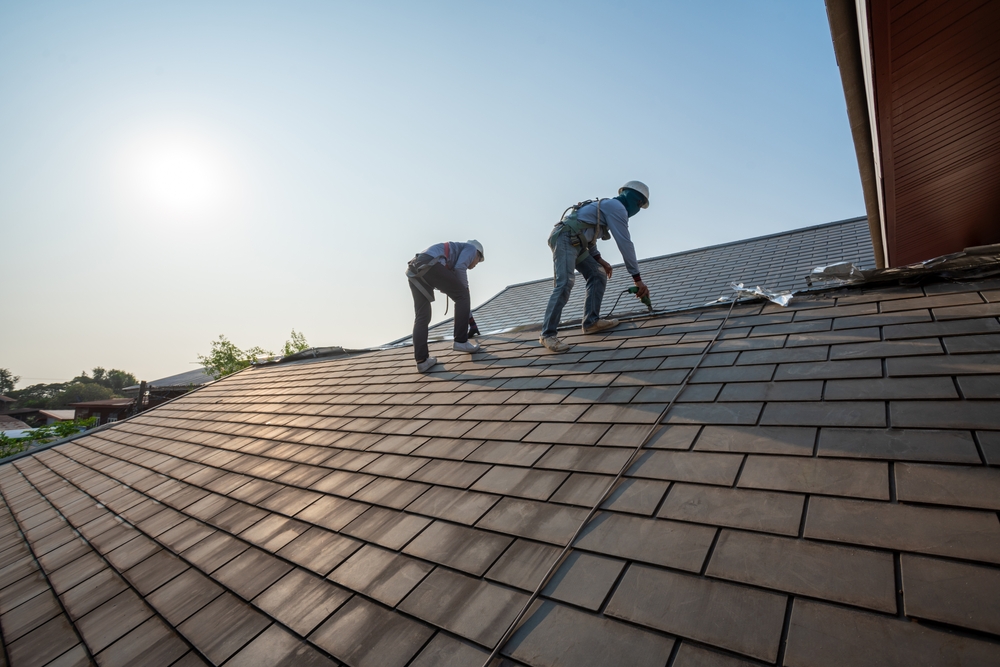

How to Choose a Licensed Roofing Company Before Your Next Roofing Project
A licensed roofing company can make a big difference when you are planning roof work on your home. Whether you are dealing with an older roof, planning ahead for spring, or simply trying to avoid a surprise later, the contractor you choose matters just as much as the materials going on your house.
Most homeowners do not deal with roofing every day. You may only replace a roof once or twice while you own a home, so it is completely normal to have questions.
Who can you trust? What should you check? Is the estimate fair? Does the whole roof really need to be replaced?
Those are good questions to ask before anybody starts tearing shingles off your house.
For St. Louis homeowners, the quiet stretch before storm season is a smart time to start looking ahead. If your roof is currently stable, you have time to research contractors, schedule an inspection, understand your options, and prepare for work that may need to happen in the coming year.
If you are comparing options, start with the roofing services CGR offers in St. Louis.
Quick Answer: How Do You Choose a Licensed Roofing Company?
When choosing a licensed roofing company, do not look at the license alone. You should also check the contractor’s insurance, local reputation, experience, inspection process, written estimate, communication, warranties, and previous roofing work.
A trustworthy roofer should be able to explain:
- What is wrong with your roof
- Whether repair or replacement makes sense
- What work is included
- What materials may be used
- How long the project may take
- What the estimate covers
- How cleanup will be handled
- What happens if another problem is found
- Who you can contact before, during, and after the job
You should understand what you are paying for before you agree to anything.
A licensed roofing company should explain all of it in plain language.
Why Choosing a Licensed Roofing Company Matters
Your roof is not a small home project.
It protects the attic, insulation, ceilings, walls, and everything underneath it. When something goes wrong, water can travel farther than homeowners expect.
That does not mean you should panic every time you see a loose shingle.
It means you want someone who can look at the problem carefully and tell you what actually needs attention.
A good roofing company should help remove uncertainty.
You should not finish an inspection feeling more confused than when it started.
That is why a licensed roofing company matters more than a quick quote.
1. Check the Roofing Company's Credentials
What a licensed roofing company should show you
The first place to start is simple.
Ask the contractor what licenses, registrations, or other credentials apply to the work being performed in your area.
Requirements can vary by location and project type, so do not assume every roofing contractor follows the exact same licensing process.
Ask:
“What credentials apply to this roofing project, and can I verify them?”
A professional contractor should be comfortable answering.
You are not being difficult.
You are doing your homework before allowing someone to work on one of the most important parts of your home.
The FTC guide on how to avoid a home improvement scam says to confirm the license and ask for proof of insurance before work begins.
A licensed roofing company shares its credentials without hesitation.
2. Make Sure the Roofing Company Is Insured
Why proof of insurance matters
A license or credential is only part of the picture.
Ask about insurance too.
Roofing involves crews working above your home with ladders, tools, equipment, and materials. You want to know the contractor operates professionally and has the proper coverage for the work being performed.
Do not be afraid to request proof.
If a contractor avoids the question or gets defensive when you ask, that is worth paying attention to.
A good company understands why homeowners want to know.
A licensed roofing company carries both liability and workers compensation coverage.
3. Start With a Roof Inspection, Not a Sales Pitch
What a real roof inspection includes
This is one of the biggest things homeowners should watch for.
A roofer should understand the condition of your roof before telling you what you need to buy.
For example, imagine you tell someone:
“There is a small water stain near the bedroom.”
If the answer is immediately:
“You need a whole new roof.”
You should have questions.
Maybe replacement really is necessary. But there should be a reason behind that recommendation.
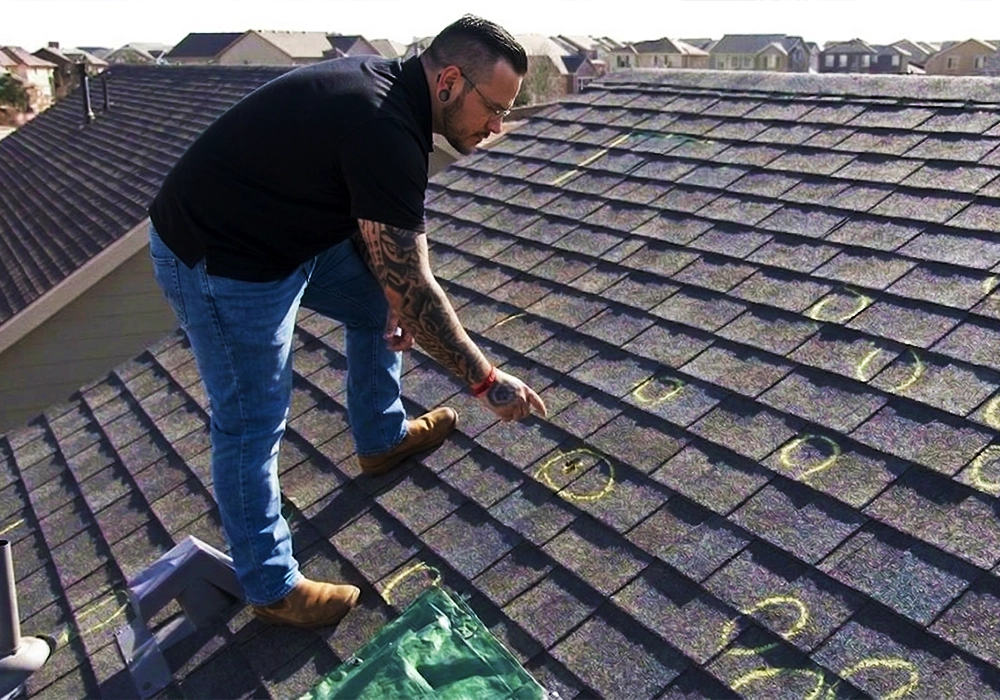
An inspection can help determine:
- Where water may be entering
- Whether shingles are damaged
- Whether flashing needs attention
- Whether damage is limited to one area
- Whether previous repairs are failing
- Whether storm damage may be present
- Whether the overall roof is still in reasonable condition
The contractor should be able to show you what they found and explain it in plain language.
Our roof inspection checklist shows what a thorough inspection should cover.
4. Ask Whether the Roof Can Be Repaired
When a repair is enough
A damaged roof does not automatically mean the whole thing has to come off.
Sometimes repair is still the sensible option.
If the issue is limited to one section and the rest of the roof is in good condition, a repair may solve the problem.
On the other hand, replacement may make more sense if:
- Problems are appearing in several areas
- Leaks keep returning
- Previous repairs are adding up
- Large sections of roofing are worn
- The roof has widespread storm damage
- The existing system is no longer performing well
Ask the roofing company:
“Can this be repaired, and if not, why not?”
You deserve more than a yes-or-no answer.
A good roofer should explain the reasoning.
For a closer look at the decision, see our guide to roof repair vs replacement.
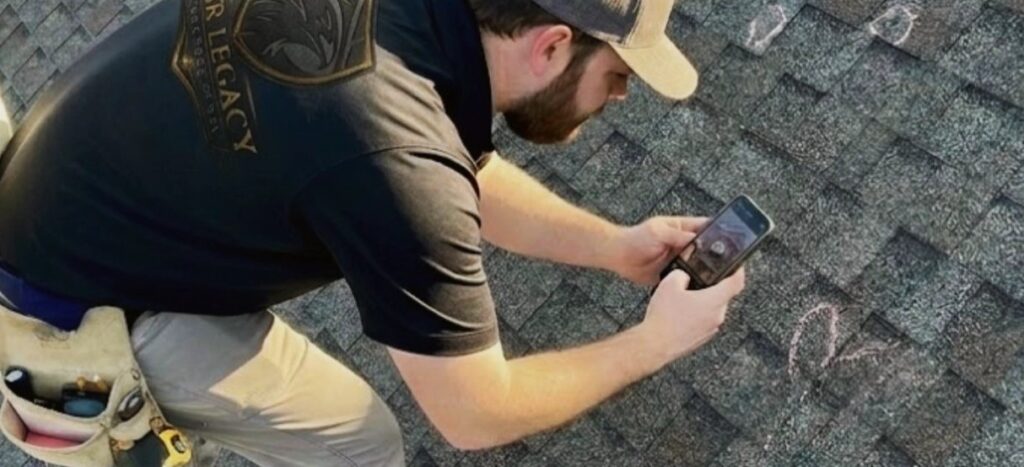
5. Ask to See Photos of the Problem
Why photos build trust
Roofing is difficult for homeowners because most of the important stuff is above your head.
You cannot always stand in the driveway and see what is wrong.
That is why photos can be so helpful.
Ask the contractor to show you what they found during the inspection.
Pictures may help you understand things like:
- Missing shingles
- Lifted shingles
- Cracked or worn areas
- Flashing problems
- Storm damage
- Gutter damage
- Areas where water may be entering
- Problems around roof openings or edges
You do not need to become a roofing expert.
You just need enough information to understand why work is being recommended.
6. Get a Clear Written Estimate
What a written estimate should list
A roofing estimate should not feel like a mystery.
Before agreeing to the project, make sure the scope of work is clear.
Depending on the job, the estimate may explain:
- Roofing materials
- Labor
- Removal of old roofing
- Disposal
- Decking work if needed
- Flashing
- Ventilation
- Cleanup
- Project timing
- Warranty information
If something is unclear, ask.
A contractor who communicates well before the project is more likely to keep you informed once work begins.
If you want to know what shapes the number, read our guide to roof replacement cost.
A licensed roofing company puts every line of it in writing.
7. Do Not Choose a Roofer Based Only on Price
What a low bid can hide
Everyone wants to save money.
That is reasonable.
But roofing estimates are not always apples to apples.
One contractor may give you a lower number because the estimate includes less work.
Another may include additional materials, protection, cleanup, or other items that the first contractor left out.
Before choosing the cheapest estimate, compare what each company is actually providing.
Think about:
Price + scope of work + materials + communication + credentials + cleanup + warranty
A cheaper estimate is not much of a bargain if you find out halfway through the job that important work was not included.
8. Look for a Local Licensed Roofing Company
Why a local licensed roofing company helps
For homeowners around St. Louis and St. Charles, working with a local contractor gives you another layer of accountability.
You want to know that the company works in your area and has a real history of serving local homeowners.
Look for:
- Recent local projects
- Customer reviews
- Before-and-after photos
- Inspection photos
- Clear business contact information
- Local service areas
- Real examples of completed roofing work
You want someone you can reach after the project too.
Roofing should not feel like a contractor showed up one day and disappeared the next.
You can also look up nearby members through the National Roofing Contractors Association.
A local licensed roofing company is also easier to reach after the job ends.
9. Read the Actual Reviews, Not Just the Rating
How to read roofing reviews
Five stars looks nice.
But take a few minutes to read what customers are saying.
Look for patterns.
Do homeowners repeatedly mention:
- Good communication?
- Showing up when promised?
- Clear estimates?
- Helpful explanations?
- Clean job sites?
- Professional crews?
- Quick response?
- Smooth project completion?
Those details can tell you more than the star rating alone.
Pay attention to how the company responds to reviews too.
A business’s response can tell you a lot about how it handles questions and concerns.
In addition, check the company profile and any complaints on the Better Business Bureau.
10. Ask About Cleanup Before the Project Starts
Questions to ask about cleanup
This part gets overlooked.
Homeowners naturally focus on the roof itself, but your yard, driveway, landscaping, and surrounding property matter too.
Before the work begins, ask:
- How will old roofing material be removed?
- How will the yard be protected?
- Who handles cleanup?
- How will leftover debris be checked?
- What happens if something on the property is damaged?
- Who should you contact after the job?
A roof replacement should not leave you cleaning up the contractor’s mess for the next week.
11. Understand the Warranty
What the warranty should cover
Before signing a roofing agreement, ask about warranties.
There may be different warranties connected to the materials and the contractor’s workmanship.
Ask:
- What is covered?
- How long does coverage last?
- Are there exclusions?
- Who do I contact if there is a problem?
- Is anything required to keep the warranty valid?
Keep copies of your paperwork after the project.
You may not need it for years, but you will be glad you have it if a question comes up later.
12. Be Careful With High-Pressure Sales Tactics
Signs of high-pressure sales
Roofing problems can be stressful enough without someone trying to scare you into signing immediately.
Be cautious if a contractor:
- Pushes you to sign before you understand the work
- Will not explain what was found
- Avoids questions about credentials
- Gives you a vague estimate
- Refuses to show inspection findings
- Says every problem requires complete replacement
- Promises a specific insurance outcome
- Uses fear to rush your decision
Some roof problems really do need quick attention.
But urgency should come from the condition of the roof, not from the salesperson.
A licensed roofing company gives you time to think it over.
Why It Pays to Choose a Licensed Roofing Company Early
Choosing a licensed roofing company works best when you are not in a hurry.
That is the real advantage of starting early.
Planning ahead gives you time to check credentials, read real reviews, and compare written estimates side by side.
There is room to ask questions and understand what your roof actually needs.
Early planning also shows whether the work is urgent or whether it can wait for better weather.
Better still, you can compare contractors calmly, instead of deciding while water is coming through the ceiling.
Booking an inspection now does not commit you to a full replacement.
It simply tells you what you may need to plan for. When you are ready, contact CGR Legacy Construction to schedule a roof inspection.