PRACTICAL ROOFING TOOLS, GUIDES & ANSWERS

Roofing Resources for St. Louis Homeowners

Find practical tools, guides, videos and answers for the roofing questions St. Louis homeowners ask most. For example, you can plan a roof budget, check a leak, look up storm history or compare repair and replacement. First, start with the situation below that sounds most like yours.

For commercial properties, options include targeted repair, flat or low-slope roof service, TPO, fluid-applied roof coatings or full replacement, depending on the roof’s condition.

What Are You Trying to Figure Out?

How much will my roof cost?

My roof is leaking

We had hail or strong wind

Repair or replace?

How old is my roof?

I am buying a home

Selling a home

Choosing a new roof

Insurance question about my roof

I manage a commercial roof

Not sure where to start

Not sure where to start?

Tools That Help You Plan the Next Step

Roof Cost Planning Calculator

How Much Could My New Roof Cost in St. Louis?

Leak Triage

My Roof Is Leaking — What Should I Do Next?

Storm History / Hail Address Report

Was My Home Hit by Hail?

Repair vs. Replace Assessment

Repair, Replace, or Inspect First?

Roof Age / Lifespan Tool

How Old Is My Roof?

Design Your Roof

See Roofing Colors & Styles on Your Home
Roofing inspector reviewing findings on a tablet during a roof inspection

Buying a Home? Know What to Check Before You Close

CGR’s First-Time Homebuyer Roof Guide covers the roof warning signs to look for and the questions to ask before closing. It also explains when another roof evaluation may help, how to weigh repair against replacement and which insurance questions to ask. Finally, it covers what to do if a roof problem comes up before closing, and it ends with a final roof checklist.

Roofing Guides by Topic

Cost and Planning

What a new roof costs in St. Louis depends on size, pitch, materials and how much decking needs replacing. To get started, read our roof replacement cost guide. Then look at financing options if you want to spread the cost.

Repair and Leaks

Most leaks start small, for example with a lifted shingle, worn flashing or a failed pipe boot. That is why it helps to learn the early signs of a roof leak and when a leak repair is enough.

Roof Replacement

However, if your roof is near the end of its life or the damage is widespread, roof replacement is usually the better investment. See what to expect during a roof replacement, from tear-off to final cleanup.

Storm Damage

Storm damage is not always visible from the ground. Because of that, find out what to check after a storm and when to book a storm damage inspection.

Hail and Wind

Hail bruises and cracks shingles, while wind lifts and tears them. Read how a hail damage roof inspection works, and also what roof damage from wind looks like.

Insurance-Related Roofing

We document visible storm damage and explain the construction side. Your adjuster, on the other hand, decides coverage. Our roof insurance claims guide walks through the process, and our insurance claim assistance page explains how we help.

Buying and Selling a Home

Buying or selling a home? First, a roof inspection tells you the roof’s condition before closing. It also helps to know how long a roof lasts so you can plan ahead.

Design and Shingle Selection

Shingle style and color change how your home looks. In addition, the right material affects how long the roof lasts. See our residential roofing options and how to choose a licensed roofing company.

Gutters, Siding, Soffit and Fascia

Your roof works together with your gutters, siding, soffit and fascia to keep water out. For that reason, it is worth looking at gutter installation, siding repair and soffit and fascia repair as well.

Commercial, Low-Slope and Roof Restoration

Flat and low-slope roofs need different materials and maintenance than homes. In some cases, a coating can extend the life of an existing roof instead of replacing it. Learn about commercial roofing, flat roofing and roof coatings.


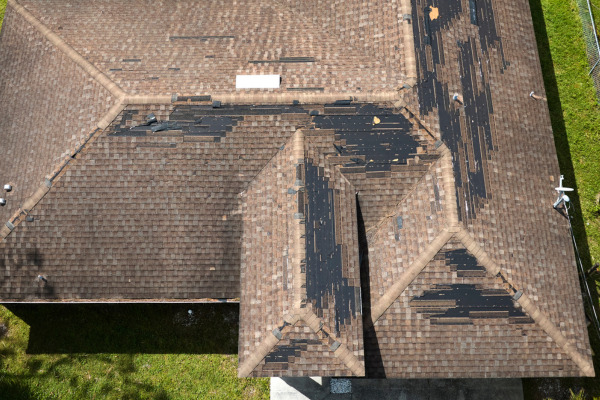
What Roof Damage Actually Looks Like

  • Hail impact
  • Wind-creased shingles
  • Missing shingles
  • Granule loss
  • Flashing failure
  • Pipe boot failure
  • Nail pops
  • Decking deterioration
  • Water stains
  • Poor previous repairs.

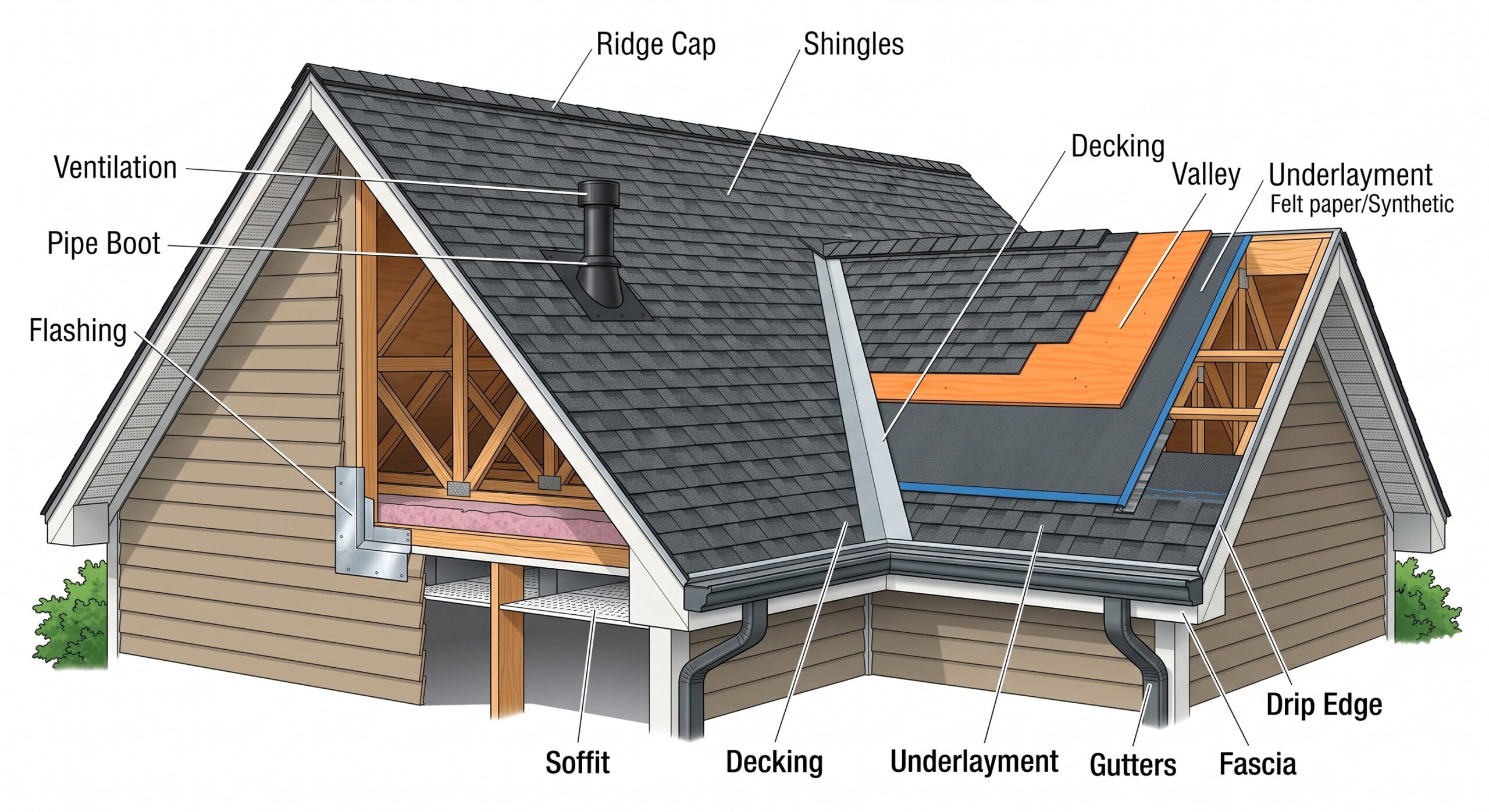
Know Your Roof

What it is

Special capping shingles or metal that fit over the peak where two roof slopes meet.

What it does

It seals the top seam of the roof and covers the exhaust vent gap, so rain and debris stay out.

Common Problems

For example, wind can lift caps loose, and older caps crack or leak at exposed nails.

What it is

The main outer layer of the roof, usually asphalt, composite, slate or metal.

What it does

Shingles shed rain, snow and ice, and they also protect the roof from sun damage.

Common Problems

Over time, shingles lose granules, curl or crack. In addition, hail can bruise them and strong wind can tear them off.

What it is

Wood boards, usually OSB or plywood, fastened across the roof trusses or rafters.

What it does

The decking is the solid base that carries the underlayment, flashing and shingles.

Common Problems

When a leak goes unrepaired, the decking can rot, delaminate or sag between rafters.

What it is

A water-resistant layer of synthetic fabric or asphalt felt laid over the decking.

What it does

It acts as a second line of defense, so wind-driven rain that gets past the shingles does not reach the wood.

Common Problems

For instance, it can tear during installation, break down from heat or trap moisture if the wrong material is used.

What it is

Exhaust vents (ridge, static or power) paired with intake vents to move air through the attic.

What it does

Good airflow pushes hot, damp air out of the attic. As a result, it controls heat buildup and helps prevent ice dams.

Common Problems

Blocked vents or too little ventilation let moisture build up, which can lead to attic mold.

What it is

A flexible rubber collar on a metal or plastic base that fits over plumbing pipes.

What it does

It forms a watertight seal where plumbing pipes come up through the roof.

Common Problems

Sun exposure dries and cracks the rubber, which makes pipe boots one of the most common sources of ceiling leaks.

What it is

Thin sheet metal, such as galvanized steel, aluminum or copper, fitted around joints and walls.

What it does

Flashing steers water away from weak spots like chimneys, skylights, dormers and roof-to-wall joints.

Common Problems

Rust, lifting, worn sealant or poor overlap during installation can all let water in.

What it is

The V-shaped channel where two roof slopes meet at an inside angle.

What it does

Valleys carry a large share of the roof’s runoff down toward the gutters.

Common Problems

Leaves and debris can back water up. Because so much water flows through, valley metal and nearby shingles also wear out sooner.

What it is

An L-shaped metal strip along the roof’s outer edges, at the eaves and rakes.

What it does

It directs runoff into the gutters, so water does not soak back into the fascia board.

Common Problems

Without a drip edge, or if it is bent or set under the underlayment, the fascia board can rot.

What it is

The wood or composite trim board along the lower roof edge that covers the rafter ends.

What it does

Fascia protects the rafter ends from weather, and it also holds the gutters in place.

Common Problems

Overflowing gutters or a missing drip edge can rot the board. Peeling paint and pest damage are also common.

What it is

Channels along the fascia boards that connect to vertical drainage pipes.

What it does

Gutters collect roof runoff and carry it away from the siding, doorways and foundation.

Common Problems

Leaves clog them, while heavy water or ice can make them sag. Leaking seams and the wrong slope cause problems too.

What it is

The exposed underside of the roof overhang, beneath the eave.

What it does

Its intake vents draw cool outside air into the attic, which keeps airflow balanced.

Common Problems

Blocked vents restrict airflow. In older soffits, the wood can also rot, the paint can peel and animals can nest inside.

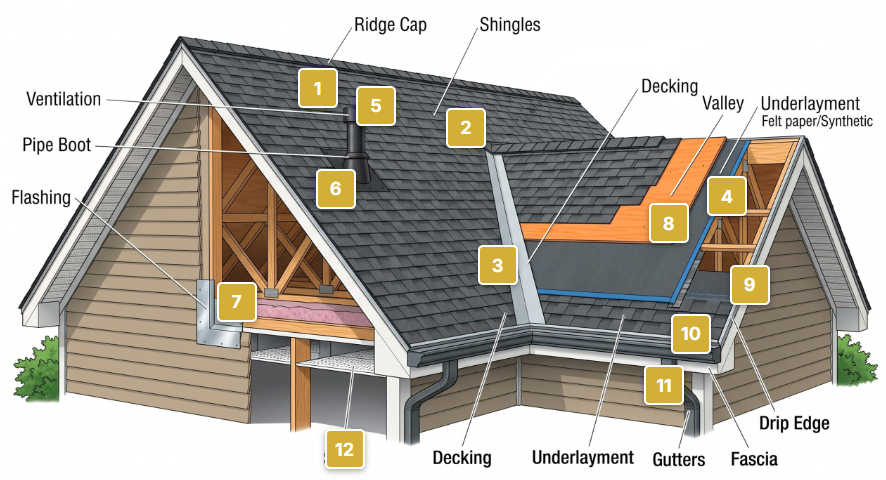
Interactive Roof Components Diagram
Click or tap any numbered marker to explore roof components
Diagram showing various parts of a roof structure

Roofing Explained

Resources for Professionals & Property Owners

  • First-Time Homebuyer Roof Guide
  • Seller Roof File Guide
  • Roof evaluation
  • Partner resources
  • Homebuyer guide
  • Roof-documentation education
  • Inspection resources
  • Commercial roof condition
  • Leak-response planning
  • Maintenance
  • Coating/restoration education
  • Assessment
  • Commercial roof planning
  • Financing pathway where appropriate
  • Inspection/assessment

Roof Coating vs. Roof Replacement

Could Your Existing Roof Be Restored?

Roof Coating

  • Repair conditions
  • Replacement conditions
  • Inspection-first conclusion

Roof Replacement

  • Repair conditions
  • Replacement conditions
  • Inspection-first conclusion